Snorkeling vs Diving in Marsa Alam: Which Should You Choose?
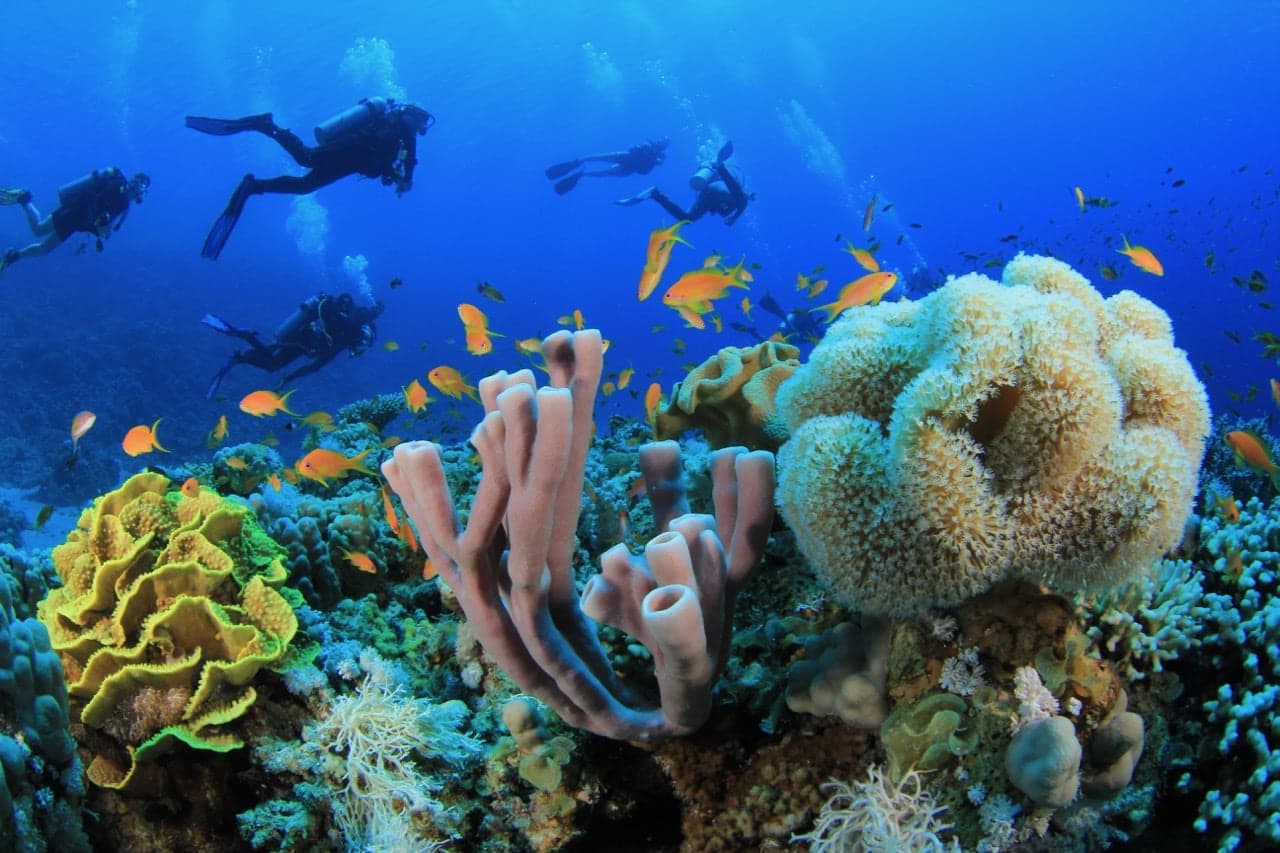
Snorkeling vs diving in Marsa Alam comes down to how close you want to get. Snorkeling needs no training and shows you the reef from the surface, often with turtles in shallow water. Diving takes you down among the coral walls: certified divers join guided dives, and beginners from age 10 can arrange a supervised try-dive.
Marsa Alam’s reefs start right off the beach, and the water is clear and warm for most of the year, so you can enjoy them either way: floating at the surface with a mask and snorkel, or diving down among the coral with a tank on your back. Both are wonderful, and many visitors do both in one holiday. The real questions are what you want to see, who is in your group and how much time you have. This guide compares snorkeling and diving honestly, using the details of our live trips, so you can choose with confidence.
The short answer
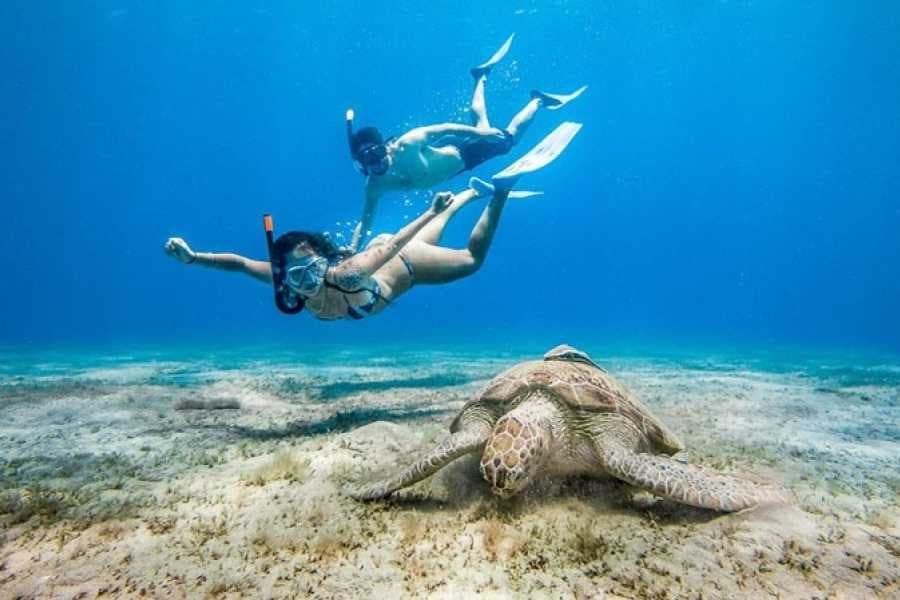
- Choose snorkeling if you want an easy, relaxed day that everyone can join, from young children to grandparents. You need no training, and the easiest spot on the coast is Abu Dabbab, where you can snorkel with sea turtles straight from the beach.
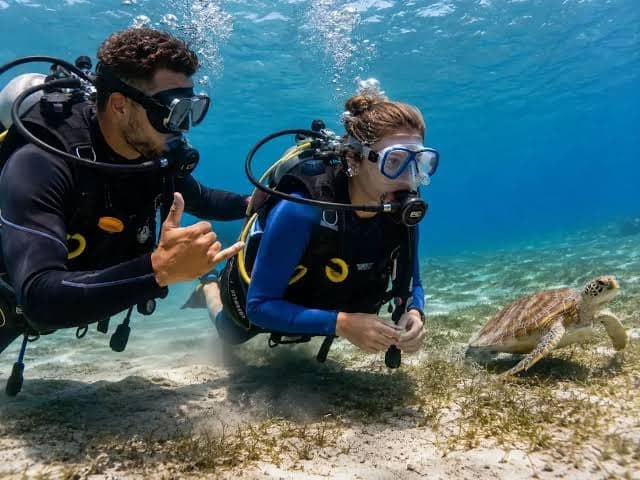
- Choose diving if you want to swim among the coral rather than look down on it. Certified divers join our guided Marsa Alam diving trip with two boat dives; beginners from age 10 can arrange a supervised try-dive instead.
- Not sure yet? Snorkel first. If you find yourself wishing you could stay down longer, book a try-dive later in the week.
What you see: from the surface or among the coral
Snorkeling shows you the reef from above. In the shallows of Marsa Alam that is a lot: coral gardens, clouds of colourful fish and, in seagrass bays like Abu Dabbab, green turtles grazing in water that is often only waist to chest deep. Because you are at the surface, you can stop, lift your head, chat and start again whenever you like.
Diving takes you into the reef. On a guided dive you drift along coral walls full of orange anthias and butterflyfish, hover over gardens of hard and soft coral, and look out for groupers, moray eels and turtles at eye level. You see the fish from the side rather than from above, you stay down for a whole dive instead of a single breath, and you reach parts of the reef a snorkeler never sees.
Neither is “better”. A good snorkel over a healthy reef can be more memorable than a dive in poor conditions, and the shallow, sunlit coral is often the most colourful. Our guide to snorkeling in Marsa Alam lists the best spots on the coast, including the reefs many hotels have on their doorstep.
Who can do each
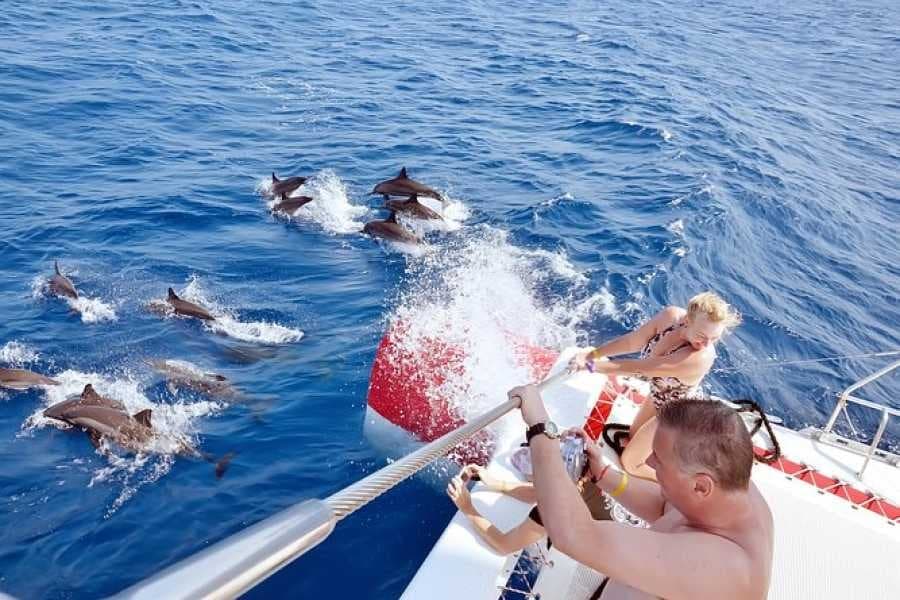
- Age: snorkeling at Abu Dabbab is for ages three and up, and the full-day boat trips to Sataya dolphin reef and the Hamata Islands take children from four. Our diving trip is for ages 10 and up.
- Experience: snorkeling needs none. For the two guided dives you need a diving certificate and your logbook; without one, a try-dive with an instructor is the way in.
- Swimming: for snorkeling at Abu Dabbab you walk in from the beach, and life jackets and pool noodles are available, so nervous swimmers can join. For diving you should be comfortable in the water.
- Health: before any dive you are asked about your health. If you have a medical condition, or are unsure whether you are fit to dive, check with a doctor before your holiday.
Trying diving for the first time
You do not need a certificate to try diving. On a supervised try-dive, often called Discover Scuba, a certified instructor explains the basics, lets you practise them in calm, shallow water and then takes you on a short, guided dive. Just tell us when you book that you have never dived, and we arrange the try-dive instead of the two certified dives.
Marsa Alam’s calm, clear house reefs are an ideal place for a first dive. Our guide to diving in Marsa Alam for beginners walks you through the day step by step, from the briefing to the safety basics every beginner learns. If you love it, a full certification course is the next step, and its fees are separate from the diving trip.
How the days compare
- Abu Dabbab snorkeling: a half day of about four to five hours, with pickup around 8:30 AM, a short drive north, a guided snorkel from the beach, free time on the beach and back at your hotel around lunchtime. Snorkeling guide, mask and fins, and entrance fees are included; lunch is not, but there is a beach café.
- Sataya or Hamata by boat: a full day of nine to eleven hours, with an early pickup, a drive south to Hamata harbour, two snorkel stops and lunch on board. Snorkeling equipment and the national park fees are included.
- The diving trip: a full day of seven to eight hours, with pickup around 7:00 AM, a briefing and equipment check, two guided boat dives with lunch on board in between, and back at your hotel in the afternoon. Full equipment, tanks and weights, a PADI dive guide and marine park fees are included, with about eight divers per guide at most.
Dive sites are chosen on the day for the conditions and your level. They may include house reefs, Abu Dabbab, Sha’ab Samadai or, for experienced divers with an advanced certificate, the deep and current-swept Elphinstone reef. Boat days, for snorkelers and divers alike, depend on the sea.
Planning tips: flights, insurance and your week
- Do not dive on your last day. After diving, wait at least 18 hours after a single dive and 24 hours after several dives before you fly. Ordinary snorkeling at the surface has no waiting time, so it fits nicely at the end of a holiday.
- Get dive insurance. Dive-specific insurance is strongly recommended and required for some sites; it is not included in the trip.
- Bring your paperwork. Certified divers need their certification card and logbook, and a personal dive computer if they have one.
- Mix them. A simple week could be a morning snorkeling with turtles at Abu Dabbab early on, a dive day in the middle, and a relaxed snorkel or a desert evening before you fly home.
Both are priced per person, and the booking form on each tour page always shows the current price; diving costs more because of the equipment, the boat and the dive guides. Cancellation is free up to 24 hours before the start. If you are still unsure where to snorkel, our guide to Abu Dabbab Bay explains what the bay is like for swimmers of every level.
Frequently asked questions
Neither is better: they show you the same reefs in different ways. Snorkeling is easy and suits everyone, while diving takes you down among the coral for a whole dive. Many visitors snorkel first and try a dive later in the week.
Yes, with a supervised try-dive, often called Discover Scuba, with a certified instructor. Tell us when you book; the two guided dives are for certified divers.
Our diving trip is for ages 10 and up. Snorkeling at Abu Dabbab is for ages three and up, and the Sataya and Hamata boat trips take children from four.
Ordinary snorkeling at the surface has no waiting time. After diving, wait at least 18 hours after a single dive and 24 hours after several dives before you fly.
Not for snorkeling at Abu Dabbab: you walk in from the beach, and life jackets and pool noodles are available. For diving you should be comfortable in the water, and an instructor goes through the basics in calm, shallow water first.
Youssef Hassan
PADI Instructor & Marine Guide
Youssef is a PADI-certified diving instructor and marine naturalist with more than 3,000 logged dives in the Red Sea. He writes about diving, snorkeling and marine conservation around Marsa Alam.