Bedouin Village Marsa Alam: What the Visit Is Like and How to Be a Good Guest
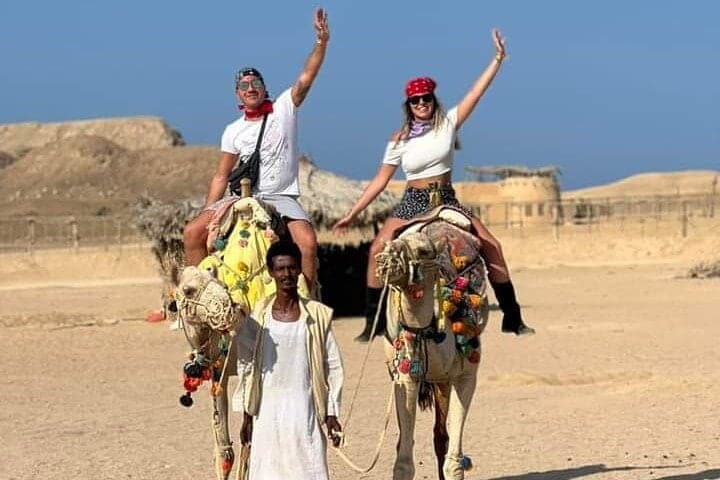
The Bedouin village visit in Marsa Alam is a stop at an Ababda village on an afternoon desert safari, with a glass of sweet tea between the quad ride and the sunset camel ride. Here is who the Ababda are, what the visit is like and how to be a respectful guest.
When visitors ask about a Bedouin village in Marsa Alam (Polish guests often search for it as “wioska beduinów”), they usually mean the village stop on an afternoon desert safari. It is a short visit to an Ababda village in the Eastern Desert behind the coast, with a glass of sweet tea, a look at how a desert home is arranged and time to ask questions through your guide. This guide explains who the Ababda are, what the visit is like on our trips and how to be a guest your hosts are glad to welcome.
Who the Ababda are
“Bedouin” is the general word for the desert peoples of the Arab world. Around Marsa Alam, the families you meet on our desert trips are Ababda, one of the oldest peoples of the Eastern Desert. Their land is the wide stretch of mountains and dry valleys between the Nile and the Red Sea, on both sides of the border between Egypt and Sudan, and their traditional range runs along the coast from around Hurghada far into the south.
For most of their history the Ababda were nomads. Families herded camels, goats and sheep through the wadis, moving with the grazing and the water, and they were known as guides and camel men on the old desert routes between the Nile Valley and the coast. Today most Ababda speak Arabic, with words and customs that link them to the Beja peoples of Sudan.
Life has changed a lot in the last few generations. Many Ababda now live in towns and villages, including in and around Marsa Alam, and work in jobs of every kind, while some families still keep animals in the desert valleys. South of town, Wadi El Gemal National Park protects a large piece of this landscape, and Ababda families have crossed its valleys for generations.
What the village stop is like
On the Marsa Alam desert safari, the village comes in the late afternoon, between the quad ride and the sunset camel ride. The programme looks like this (times are approximate and depend on your hotel):
- Around 2:30 PM: pickup from your hotel in an air-conditioned vehicle.
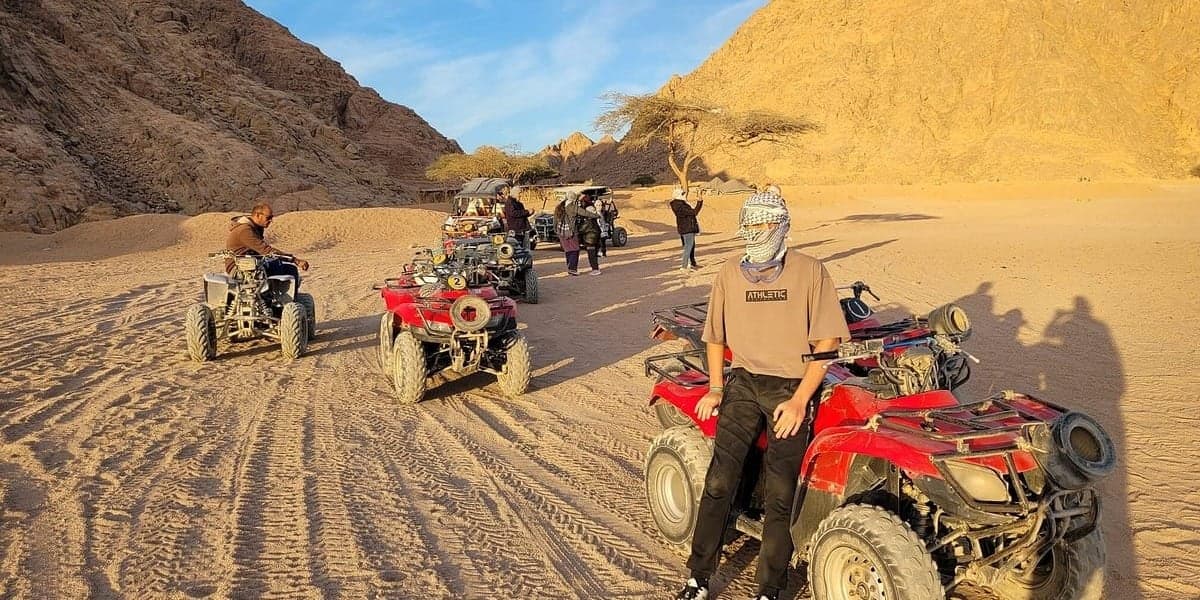
- Around 3:30 PM: safety briefing and a guided quad ride across the dunes.
- Around 4:45 PM: the stop at an Ababda village, to see traditional desert life and share a glass of Bedouin tea.
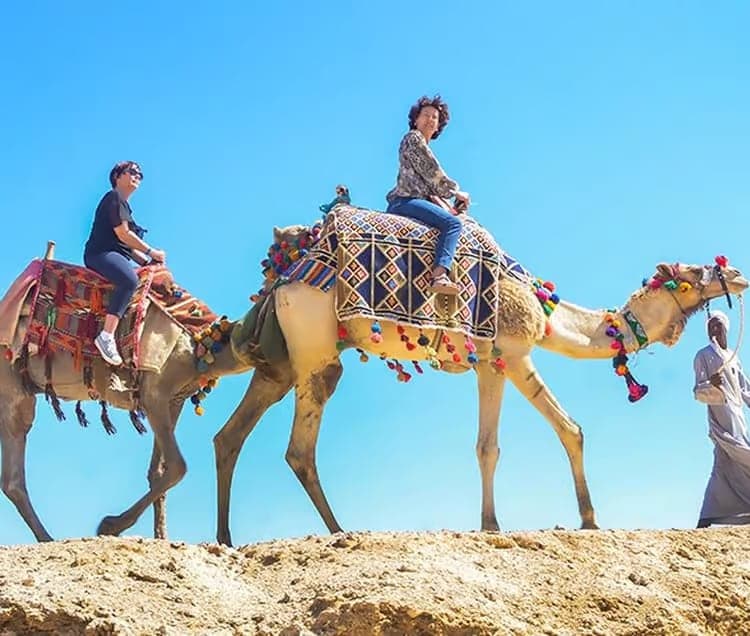
- Around 5:30 PM: a camel ride along the ridge as the sun goes down.
- Around 6:30 PM: barbecue dinner, music and a guided look at the night sky, then the drive back at around 8:30 PM.
The visit itself is simple and unhurried. You are offered tea, you see how a desert home is arranged and how the family lives with the heat and the distances, and your guide translates so you can ask questions. Good ones to ask: how families find water and grazing, how camels are cared for, and how life in the desert has changed since their grandparents’ time. It is a real place where people live, not a show, so the visit is quiet rather than staged.
For the full evening from pickup to the stars, see our Marsa Alam desert safari guide.
Tea, coffee and desert hospitality
In the desert, offering a drink to a visitor is the first gesture of welcome, and it still matters. On our trips the village stop includes Bedouin tea: strong and sweet, served in small glasses. Taking at least one glass is polite, and it is the natural moment to say hello and thank your hosts through your guide.
The Ababda are also known for jabana, a coffee made by roasting the beans, crushing them with ginger and brewing them in a small clay pot of the same name. Making and sharing a pot of jabana is a social ritual for meeting friends and welcoming strangers, and it can take a while: nobody rushes it. If you hear the word on your trip, now you know what it means.
How to be a respectful guest
A few simple habits make the visit better for everyone, and your guide is always there to help:
- Ask before you photograph people, and accept a no with a smile. Be especially careful with women and children. Landscapes, camels and the desert light are always fair game.
- Dress modestly: shoulders and knees covered is respectful in a village and practical anyway, because it keeps off the sun and the dust.
- Take and pass glasses and food with your right hand, the usual courtesy in Egypt.
- Don’t walk into homes or enclosures unless you are invited, and keep your voice down. You are a guest in someone’s home.
- Don’t hand out sweets, pens or money to children. If you want to give something, ask your guide what is appropriate.
- Tips are optional and not included in the price. If you want to thank the people who looked after you, your guide can tell you how.
- Take all your rubbish back with you. The desert keeps everything for a very long time.
None of this is complicated. A smile, a “shukran” (thank you) and genuine curiosity go a long way.
Which trips include a Bedouin village or tea stop
- The Marsa Alam desert safari: the classic evening with a quad ride, the Ababda village with tea, a sunset camel ride and a barbecue dinner under the stars. About 5 to 6 hours in the afternoon, and children from age three can join.
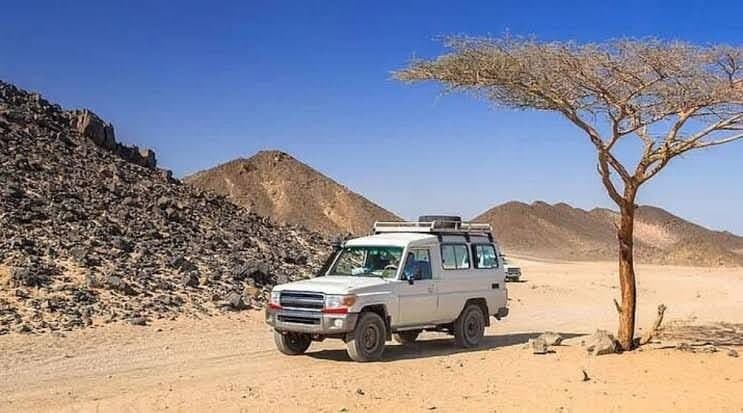
- The Super Safari by 4x4: the same desert evening with a 4x4 drive over dunes and through desert valleys added. You meet the Ababda, ride a camel and watch the sunset, then have dinner in the desert. About 6 to 7 hours.
- The sunset camel ride: no village stop, but the camels are led by Ababda handlers and the ride ends with Bedouin tea. A short outing of about 2.5 to 3 hours.
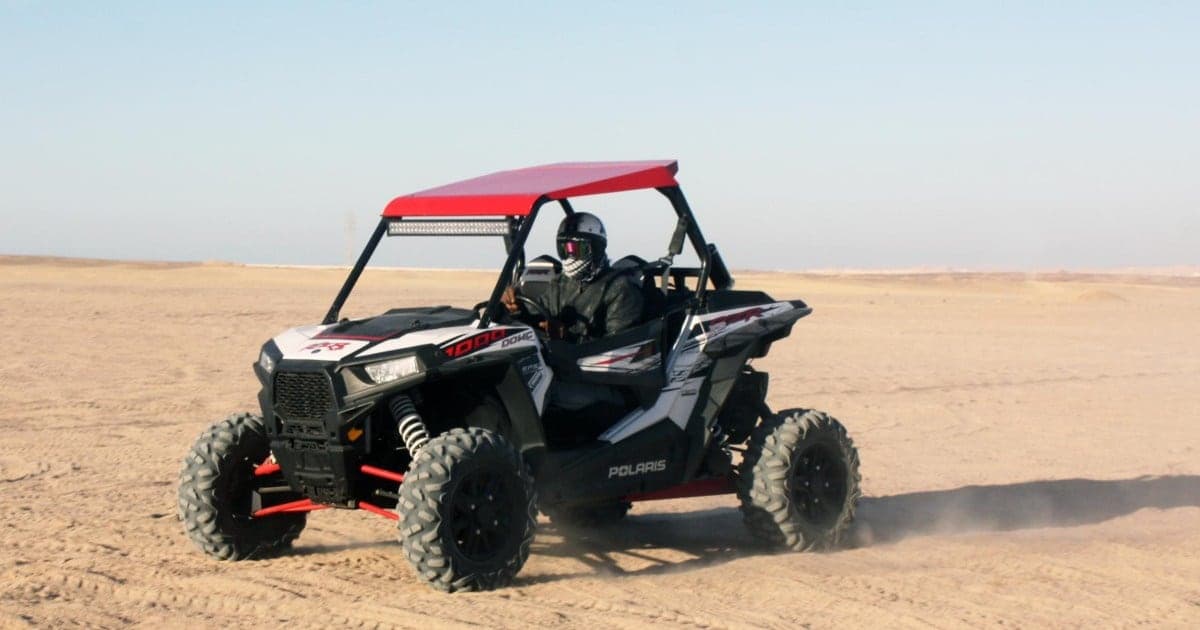
- The family buggy safari: a 3-hour drive in a four-seat buggy with a tea stop at a Bedouin camp, where you can meet your hosts.
If the village is the reason you are booking, choose the desert safari or the Super Safari. To compare every desert trip side by side, see our guide to the best Marsa Alam safari tours, and if you are choosing how to ride the dunes, our comparison of quad vs buggy vs jeep.
Practical tips for the day
- Wear closed shoes and bring a scarf for the dust. A light jacket helps after sunset, because the desert cools quickly in the evening.
- Sunglasses, a hat and sunscreen are useful for the afternoon part of the trip.
- Pickup times are confirmed by WhatsApp the evening before. Our hotel pickup checker shows which areas each trip collects from.
- Vegetarian dinners are available on the desert safari; tell us about allergies when you book.
- Bring a little cash if you would like to tip.
Frequently asked questions
Yes. The afternoon desert safari and the Super Safari both include a stop at an Ababda village in the desert behind Marsa Alam, with Bedouin tea and time to meet your hosts through your guide.
The families you meet on our desert trips are Ababda, a people of the Eastern Desert between the Nile and the Red Sea. They were traditionally nomads who herded camels, goats and sheep, and many now live in towns and villages along the coast.
Yes, but always ask before you photograph people, and accept a no. Be especially careful with women and children. Landscapes, camels and the desert itself are fine to photograph.
Modest, comfortable clothes that cover your shoulders and knees, closed shoes, a scarf for the dust and a light jacket for the evening, when the desert cools quickly.
Yes. Children from age three can join the desert safari and the Super Safari. Under-16s ride as passengers rather than driving a quad alone, and the camels and the village stop are an easy part of the evening for them.
Omar Said
Founder & Head Guide
Omar has led desert and sea excursions on Egypt’s Red Sea coast for over 15 years. Born in Marsa Alam and a licensed guide, he founded Marsa Alam Safari to share the region he knows intimately — from the best dolphin reefs to the quietest desert valleys.